What Actually Happened
The AI-video adoption curve is no longer a curve. It is a baseline. 78% of marketing teams use AI-generated video in at least one campaign per quarter, up from roughly 30% in early 2024. 73% of Fortune 500 companies have integrated AI video into content workflows. Synthesia is at $100M ARR with 90% of the Fortune 100 as customers. HeyGen grew 152% year over year in January 2026. Adoption is not the question.
The performance picture is where the story splits. Q1 2026 industry data shows AI video hitting 87% engagement parity with human shoots on commodity social clips and dropping to 61% parity on brand storytelling content that requires emotional nuance. Personalized 1:1 outreach video — Sendspark-, Vidyard-, Loom-style sales reps recording or generating short videos to named prospects with AI assist on transcription, captions, and dynamic personalization — is producing 25–30% reply rates, three to five times the baseline of plain text email. AI dubbing is cutting localization cost roughly 90% and adding 78% more watch time and 60% longer view duration on translated content. AI avatar usage in scaled, repetitive workflows — onboarding sequences, technical documentation, internal training — is producing real productivity wins. HeyGen's Pyne case study reports 10× engagement on product education with AI demo agents.
The other half of the picture is what most marketing leaders are not flagging in their 2026 plans. 78% of consumers say they trust videos with real people more than AI, and 82% report having watched a video they believed was AI-generated; of that group, 36% say it lowered their trust in the brand behind it. "Polished" is now synonymous with "fake" across the 2026 trend reports — Content Marketing Institute, Forrester's 2026 trust prediction, and Demand Gen Report's 2026 research all carry some version of the same finding. Mentions of "slop," the catch-all term for lazy generic AI content, surged 200% in 2025. 77% of B2B buyers rely more on peer reviews and customer-led video than on brand materials. Customer-testimonial video on B2B SaaS landing pages converts 15–25% better than text. Adding three lines of video testimonial to a landing page lifts conversion 34%.
The data does not say AI video does not work. It says AI video works in narrow, specific places and underperforms in the place B2B SaaS marketing leaders are spending most of their attention: the top of the funnel.
The Funnel Split Is the Whole Thesis
Mid-funnel and late-funnel video is mostly mechanical. A sales rep wants to follow up after a discovery call with a personalized recap. A customer-success team wants to localize a product onboarding into seven languages. A marketing ops team wants to test 30 paid social variants on a generic feature page. The output gets seen by one person, in one context, with the prospect already at the table. The trust work has been done elsewhere; the video is doing transactional work. AI is excellent at this because the substitution risk is low and the "feels human enough" bar clears at scale.
Top of funnel is different work. A buyer who has never heard of the brand lands on the homepage, the founder talk, the customer testimonial, the LinkedIn brand video. The video is doing the brand and trust work — making a stranger comfortable enough to consider becoming a buyer. That work fails when the buyer detects, consciously or not, that the human in the video is not really there. The 36% trust-decline number is the operational version of that failure. So is the 61% engagement parity floor on brand storytelling. So is the documented "polish equals fake" rejection.
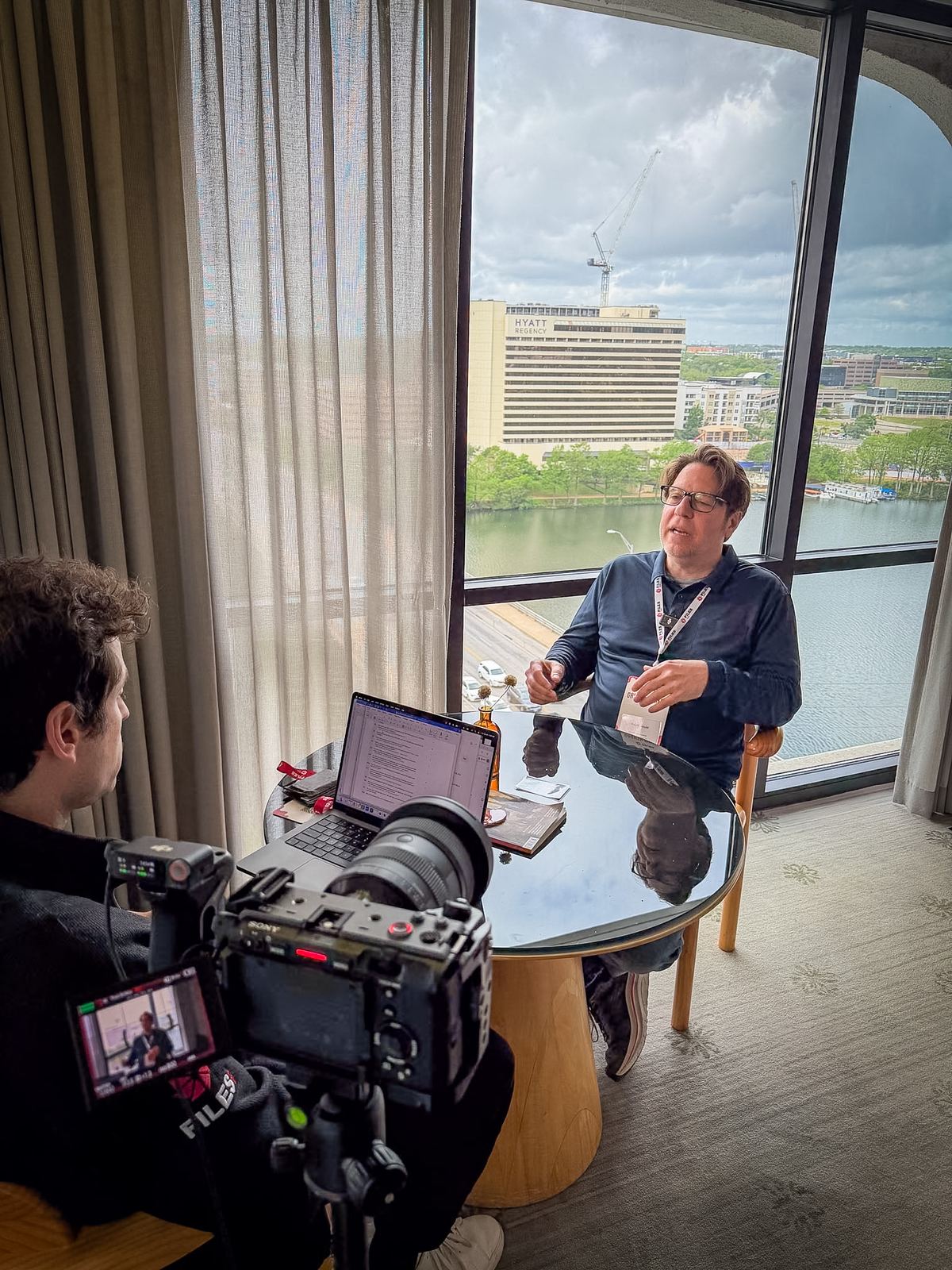
The structural answer is uncomfortable for an operator running flat headcount in 2026. Two production lines instead of one. AI for the mid-funnel and operational layer, where it earns its line in the budget. Captured human content — founder-led, owner-led, customer-led, on-stage — for the top of the funnel, where the trust work happens.
The Data
Two pulls from our book and the third-party picture, in both directions.
Across our retainer book in Q1 2026, the captured-content asset categories that surfaced most often as the closing piece of content in B2B SaaS deals were the ones the AI stack categorically cannot do at the trust-building threshold: founder-led explainers, customer-voice cuts on real customer footage, on-stage event capture, and recorded technical conversations between subject-matter experts. Roughly 70% of the closing-piece-of-content callouts on our engagement debriefs trace to those four categories. The other 30% is a long tail of mid-funnel cuts, paid social, and email assets — exactly the work we increasingly hand to client AI stacks rather than produce ourselves. The split is real on our side too.
Our 2026 production time-study tells the same story from the other end. The cost per ready-to-ship cut from a captured-shoot day lands around $180 across our book — and the captured asset shows up in three to five distribution surfaces over the next six months. A comparable AI-generated cut on personalized sales outreach lands at a fraction of the cost per cut, but does its work in one context, one outbound thread, and is not redistributable. The cost-per-touchpoint math actually favors captured content for top-of-funnel work and AI for mid-funnel personalized work. We had to run the math twice before we believed the second part. The honest framing is that AI video and captured video are not substitutes; they are complements at different layers of the funnel.
Third party. The 87%/61% engagement parity split on commodity-vs-brand storytelling. The 78% real-people preference and 36% trust decline when AI is detected. 25–30% reply rates on AI-assisted personalized outreach. The "polish equals fake" 2026 shift across CMI, Forrester, and Demand Gen. LinkedIn 2026 algorithm coverage showing native video runs roughly 5× the feed reach of static, with personal profiles allocated 65% of feed versus 5% for company pages — the structural distribution advantage sits with content that puts a real human in the cut. Wistia's 2026 State of Video reports human-creator content materially outperforming AI-generated stock-style assets across its 13 million-video sample.
The Counter-Argument, Steelmanned
The strongest case against funnel-splitting is operational. A B2B SaaS marketing leader running flat headcount in 2026 cannot reasonably operate two production stacks simultaneously. Captured-content production is operationally heavy in ways an AI workflow is not. The AI stack already lives inside the marketing software bundle the team pays for; the captured stack requires camera operators, locations, edit time, and a calendar. If the test is "what is the cheapest way to hit the dashboard target by Friday," the answer is to run AI everywhere and hope the engagement parity does not show up in next quarter's brand-search numbers.
Two responses. First, the operational argument is mostly correct in the short run and mostly wrong by month nine. The dashboards that measure short-run velocity do not measure the brand-trust metrics that lag by two to three quarters. The captured top-of-funnel line is the one that compounds over twelve months; the AI mid-funnel line is the one that produces this week's number. A marketing leader who runs the AI-everywhere playbook will hit Q3 dashboards and miss FY brand-search and pipeline-mix numbers, which is exactly what shows up in the third-party "polish equals fake" data already.
Second, the operational argument assumes captured content has to be in-house, which it does not. The structurally defensible version is AI stack in-house, captured stack on retainer. That keeps the operational footprint flat and routes the structurally defensible work to the line that does not sit on the marketing team's headcount.
What to Do Monday
Run the funnel-split audit on your own catalog. Walk through the last twelve months of distributed video and tag each asset honestly. Top of funnel doing trust, brand, or founder work, or mid-funnel doing transactional and operational work. The first bucket is the budget you protect with captured human content. The second bucket is the budget you can route to the AI stack you already pay for.
Do not run "people in the videos" as a binary. The brand layer needs the founder, the customer, or the SME on camera. The personalized outreach video needs the AE on camera, but produced inside the team's outreach tool with AI assist for transcription, captions, and dynamic personalization. The dubbing layer can be fully AI. The internal training and onboarding layer can be Synthesia-grade scaled avatars. Tag each layer separately and route each layer to the production line that the data says wins it.
Audit the AI-tax line on the marketing software stack. Sendspark, Vidyard, Loom AI, Synthesia, HeyGen, Firefly, Agentforce — pull the renewal quotes and the actual usage data. Most B2B SaaS marketing teams in our book are paying for two or three overlapping AI video tools they do not use at scale because the use case is not actually mid-funnel transactional. Consolidate to the tools that map to the workflows where the data says AI wins. Cancel the rest.
Lock the captured-content cadence on a retainer rather than running it as a one-off shoot. The structurally defensible version is recurring. A monthly or quarterly capture day, a guaranteed deliverable count, a known asset library out the other side. The same capture day produces the founder-led brand piece, the customer-voice cut, the LinkedIn vertical, the email asset, and the long-form YouTube cut. One day of capture, six months of distribution. The retainer is the line that survives Q3 budget review because the deliverables are concrete and recurring; the project shoot is the line that does not.
Stop testing AI video on the brand layer before testing it on the operational layer. Most marketing leaders run their first AI video pilot on the homepage or the explainer because the homepage is the highest-attention surface. The data says that is the worst surface for the test. Run the AI pilot on the personalized outreach layer where the data already shows it wins. Run the captured-content investment on the brand layer where the data says it wins.
The B2B SaaS marketing teams that lose 2026 will be the ones that ran AI everywhere because the spreadsheet said so and watched their brand-trust metrics drift two quarters later. The teams that win will be the ones that split the funnel honestly and routed each layer to the line that the data says actually works.