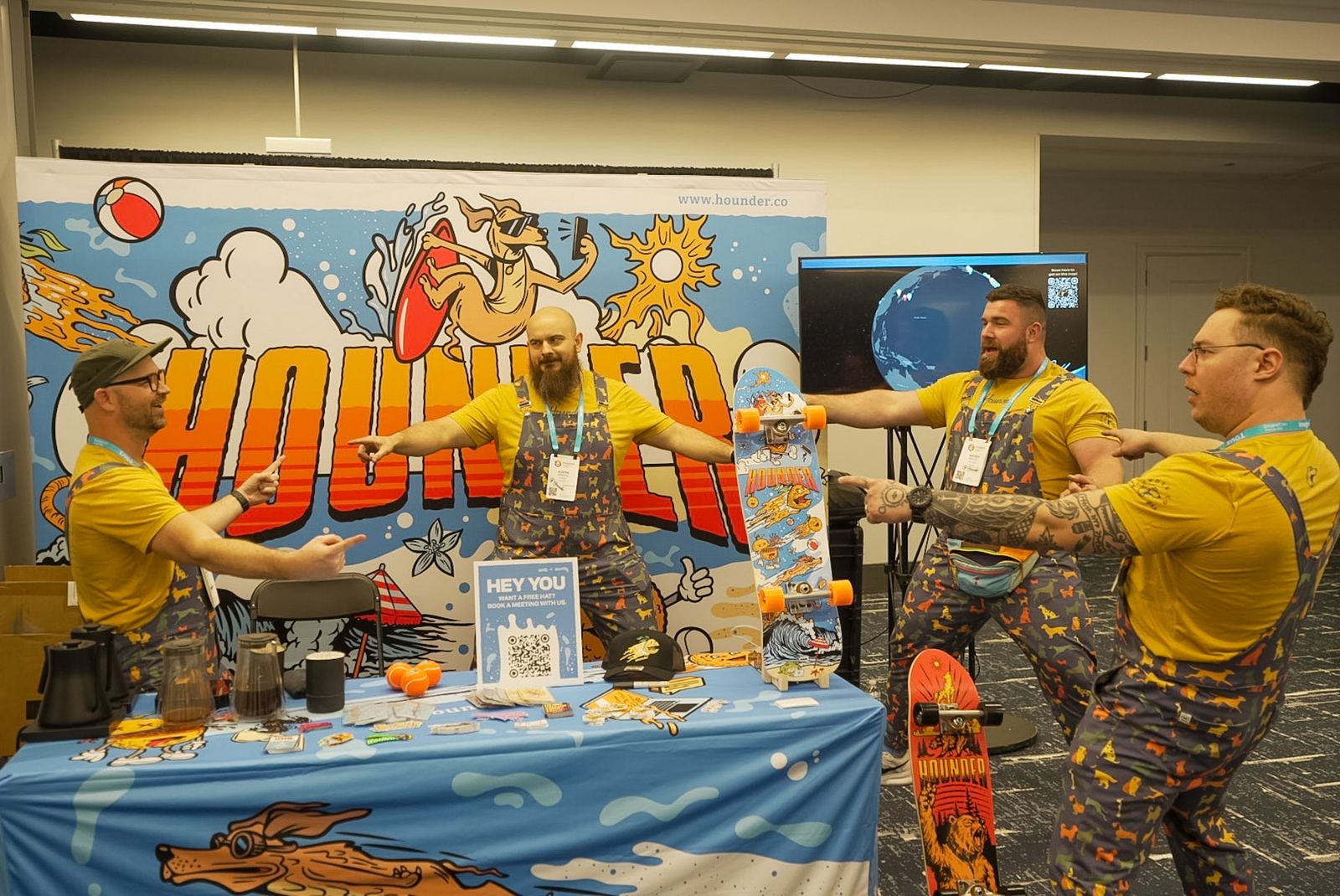
Recent conference recap we produced — Hounder at DrupalCon
The Framework: Three Layers of Capture
Most event video fails because the crew shoots for one format — usually a highlight reel. Then marketing gets back a polished 3-minute video and nothing else. The content calendar goes empty two weeks later.
The fix is capturing in three layers simultaneously, each designed for a different format and platform:
- Layer 1 — Long-form (8–15 min): The definitive event recap. Lives on YouTube, drives search traffic, serves as a resource for people who couldn’t attend. This is the anchor asset.
- Layer 2 — Mid-form (2–5 min): Individual talks, interviews, panel highlights. LinkedIn content, email campaigns, speaker amplification. These have the longest shelf life.
- Layer 3 — Short-form (15–90 sec): High-energy moments, soundbites, crowd reactions. Instagram, TikTok, Reels, X. These drive discovery and reach new audiences.
Each layer requires different framing and pacing decisions on shoot day. A crew that only plans for a highlight reel will miss the material needed for everything else.
Before the Event: Build the Deliverables List First
Before the camera rolls, we define every asset this event needs to produce. Not “capture moments” — that’s how you get 8 hours of footage and one usable clip. We define specific deliverables:
- 1 long-form recap (YouTube)
- 4 speaker spotlight clips (LinkedIn)
- 12 short-form social cuts (Instagram, TikTok, X)
- 1 event trailer for next year’s promotion
- 3 email content blocks with embedded video
- 1 SEO blog post with embedded clips
- 60-day posting calendar with captions and thumbnails
Every shot on event day is in service of a specific deliverable. Nothing is filmed on a hunch.
During the Event: The Shot System
On the ground, we run a structured shot system across the full event:
Morning: Venue establishing shots, signage, early attendee energy. These become B-roll for every deliverable and the recap intro.
Sessions: Keynote and panel coverage from two angles. We capture full talks for mid-form extraction and flag specific soundbites for short-form in real time.
Interviews: Pre-scheduled 5–10 minute sit-downs with speakers, sponsors, and attendees. Shot with consistent framing so they cut together cleanly across formats.
Booth / hallway: Candid interactions, product demos, community moments. These are the most shareable clips and the hardest to plan for — so we keep a camera dedicated to them all day.
End of day: Wrap-up soundbites and reaction clips. These often become the best social content because the energy is authentic.
After the Event: The 60-Day Calendar
This is where most teams drop the ball. They get the footage back and have no plan for it. Here’s the distribution system we build on the flight home:
Week 1–2: Same-day social cuts posted within 48 hours. Event recap trailer released. Speaker tags and attendee mentions for maximum engagement while the event is still top of mind.
Week 3–4: Long-form recap goes live on YouTube. Individual speaker spotlights released on LinkedIn. First email campaign with embedded video clips.
Week 5–8: Evergreen content phase. Educational clips, behind-the-scenes cuts, repurposed interview segments. This is where the content starts reaching people who weren’t at the event and didn’t know you existed.
Week 9–12: Throwback and teaser content. Preview clips for next year’s event. “In case you missed it” compilations. Blog post with embedded highlights optimized for search.
The Output
From a single 2-day event shoot, this system produces:
- 1 long-form recap video
- 4–6 mid-form interview/session clips
- 12–15 short-form social cuts
- 1 event trailer
- 3 email content blocks
- 1 blog post with embedded video
- A complete 60-day posting calendar
- An organized raw footage library for future use
That’s 20+ individual content assets from one production window. Deployed across every platform your audience uses, for three full months. And next year, you already have a template to repeat the whole system.