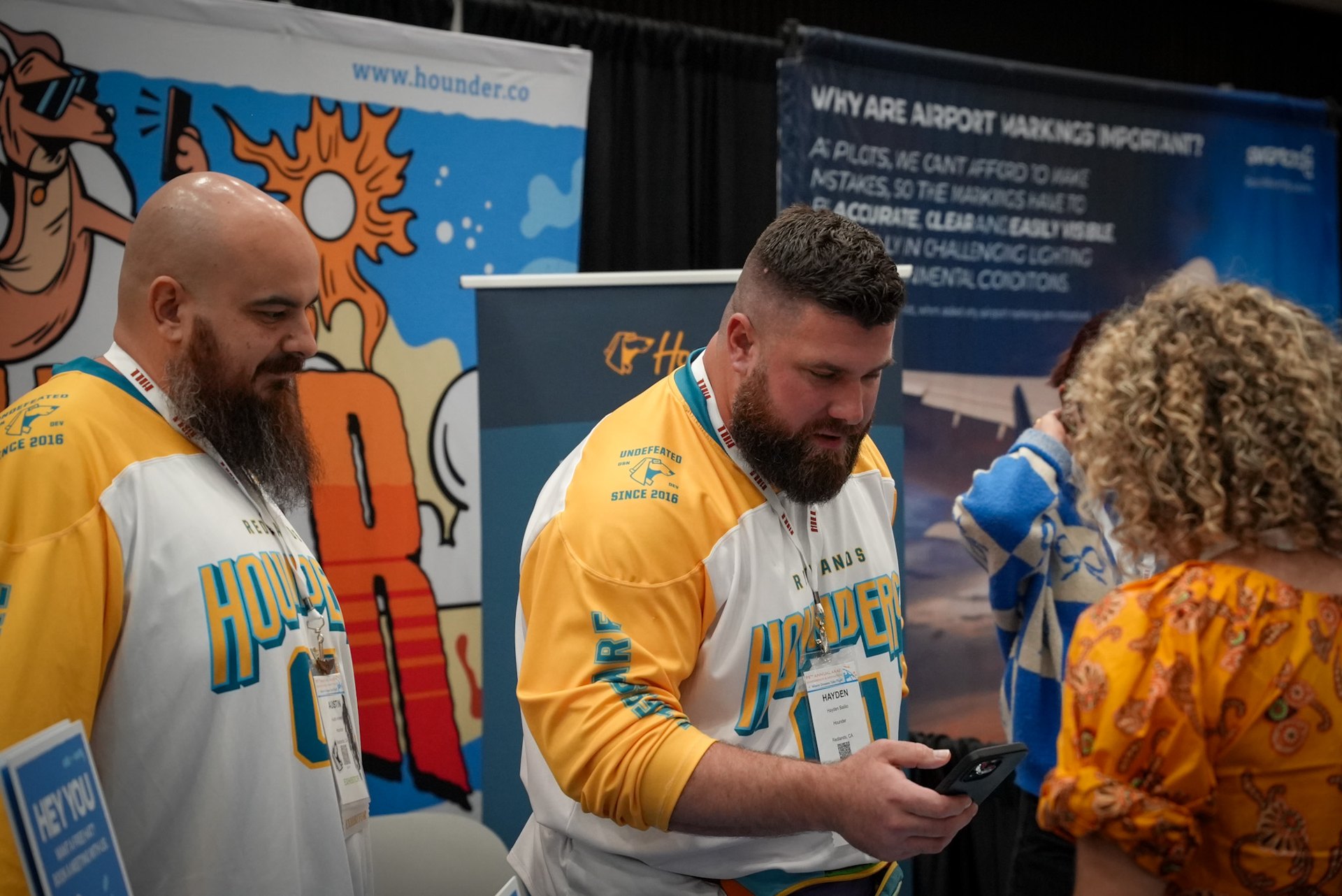
Recent conference recap we produced — Hounder at DrupalCon
Wrong: Film Everything. Right: Film for Deliverables.
The most common mistake in event coverage is treating the camera like a safety net — if you shoot enough, something useful will emerge in the edit. This is how you end up with 8 hours of footage and a 2-minute highlight reel nobody watches twice.
Before any event we cover, we build a deliverables list first. What specific assets does this client need? A long-form recap for YouTube? Speaker soundbites for LinkedIn? A trailer for next year's event promotion? Thirty-second social cuts for the next 8 weeks?
Every shot is in service of a specific deliverable. Nothing is filmed on a hunch.
Wrong: One Format. Right: Layered Capture.
An event happens once. Your content from it should live in multiple formats for months.
- Long-form recap (8–15 min) — the definitive record of what happened. Lives on YouTube, drives search, serves as a resource for people who couldn't attend.
- Mid-form segments (2–5 min) — individual talks, interviews, panels. LinkedIn content, email campaigns, speaker amplification.
- Short-form clips (15–90 sec) — high-energy moments, memorable soundbites. Instagram, TikTok, Reels, X.
Each format requires different framing and pacing decisions on shoot day. A team shooting only for a highlight reel will miss the material you need for everything else.
Wrong: Delivering Files. Right: Delivering a Library.
Raw files and even finished videos aren't the real end product. Organized, labeled, ready-to-deploy content assets are.
Every event we cover, clients receive a structured content library: clips labeled by format and platform, a 60-day posting calendar, thumbnail and caption suggestions, and a usage guide for their team. That's the difference between a vendor and a production partner.
The Measure of Good Event Coverage
A successful event coverage engagement isn't measured on shoot day. It's measured by how much content your team is still actively using 90 days later. If the answer is nothing — regardless of how good the footage looked — the coverage didn't work.