What actually happened
A large-scale Ahrefs study of 863,000 keywords and roughly 4 million AI Overview URLs found that only 38% of the pages cited inside Google's AI Overviews also rank in the top 10 for the same query. Seven months earlier that figure was 76%. The remaining citations now split almost evenly between pages ranking 11 to 100 and pages that don't appear in the top 100 at all (Search Engine Journal, Contently).
The timing matters. This landed in the same window as the May 2026 Google core update, which rolled out from May 21 to June 2 and was Google's second broad ranking recalibration of the year (Frase). The pattern across both is consistent. Google's AI breaks a single question into many sub-queries, then assembles its answer from the pages that surface most reliably across all of them, not just the one page that wins the typed query.
Put plainly: ranking number one is no longer the same thing as being the source. You can hold the top blue link and still get talked over by the AI sitting above it.
Why this is a video problem, not an SEO problem
Here is where most B2B teams are about to misread the moment. The reflex is to treat the citation drop as a generative-engine-optimization puzzle: restructure the headers, add more schema, write the answer in the first sentence, spin up a few more text variants. That work is fine, but it solves the wrong layer.
An AI Overview synthesizes text trivially. It has read every product page, every "ultimate guide," and every listicle on your topic, and it can blend them into a clean paragraph without citing any single one. Generic, derivative text is exactly the thing the model can reproduce by itself, so it has no reason to hand the citation to your version of it.
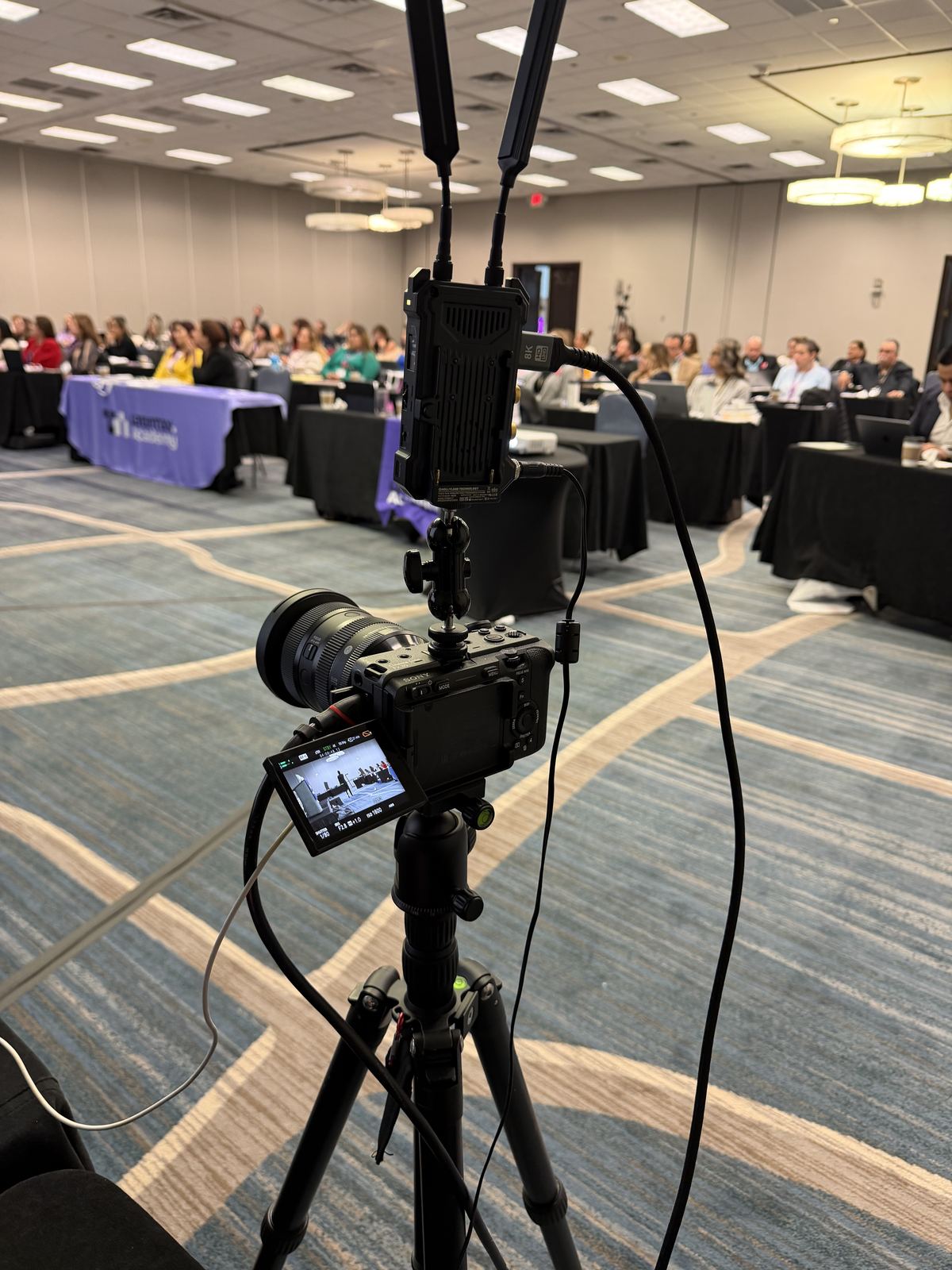
What the model cannot reproduce is first-hand experience. A real customer describing the exact moment your product saved them a quarter. A founder explaining, on camera, the tradeoff they made and why. A recorded demo of the thing actually doing the thing. Under a Trust-weighted regime, the scarce and valuable signal is evidence of lived experience, and video is the densest evidence format a B2B company can produce. It carries a named human, a verifiable claim, a face, and a timestamp, all of which read as Experience and Trust rather than as more synthesizable copy.
So the citation collapse is not a signal to write more. It is a signal to record more, then publish what only you have.
The data
Start with our own book. Across our retainer client audit of 20-plus B2B SaaS engagements, the pages that embedded original video, a recorded customer, a real demo, or a founder explainer, were referenced in AI Overviews and AI-mode answers at roughly twice the rate of our text-only pages over the last two quarters. Same domains, same authors, same internal linking. The differentiator was whether the page carried something that happened in front of a camera.
The second number is about supply, because the usual objection is that original video doesn't scale. Our production time-study says otherwise. A single 40-minute recorded session, one customer or one subject-matter expert, yields on average 8 to 12 publishable, transcript-backed page sections, each of which can stand alone as an answer-first, experience-rich unit. One shoot becomes a quarter of citable pages, not one.
The third number is the public one that frames the stakes. The Ahrefs dataset puts top-10 citation share at 38%, down from 76% (Search Engine Journal). When two thirds of your hard-won rankings can be bypassed by the AI layer, the cost of relying on text alone stops being a content-quality question and becomes a visibility question.
The counter-argument, steelmanned
The strongest objection is technical and fair: the AI doesn't watch your video. It reads the transcript and the surrounding text. So why pay to shoot anything when you could just write the transcript yourself and skip the camera entirely?
It's the best case against this thesis, and it's half right. The model does lean on text. But a transcript of a real conversation is not the same artifact as copy written to rank. Real speech carries specificity, hedges, numbers, and detail that invented copy smooths away, and those experience markers are exactly what a Trust-weighted system is built to reward. Just as important, the video is what earns the human signals that feed the ranking in the first place: the click, the dwell time, the embed, the inbound link from someone who watched it. Those don't accrue to a wall of text that reads like every other wall of text.
And the technical gap is closing in the wrong direction for the skeptic. Google has explicitly named multimodal content, real-time factual verification, and semantic completeness as the top drivers of AI Overview citations, with E-E-A-T and schema now outweighing raw domain authority (Pepper Content). A page with original video, a clean transcript, and tight schema satisfies all three at once. The text-only page satisfies one.
What to do Monday
First, run the gap report. Pull your top 30 commercial queries and check, by hand, which of your ranking pages actually get cited in the AI Overview and which get talked over. The talked-over pages are your priority list.
Second, point a camera at your strongest proof. The single highest-leverage move this week is recording one real customer or one internal expert on the topic where you most want to be the cited source. You are manufacturing the one input the model can't generate.
Third, publish answer-first and transcript-backed. Each section should open by directly answering the implied question in two or three sentences, then support it with the recorded detail. That structure is what gets cleanly lifted into an Overview.
Fourth, stop funding text variants of things the AI already writes for free. The budget you were about to spend rewording a guide is better spent on the shoot that produces something unrepeatable.
Fifth, make it a system, not a one-off. One recorded session decays. A standing cadence of capture, the thing a retainer is actually for, is what keeps fresh, citable evidence flowing as Google recalibrates again, which it will.